Percentage Calculations: Formulas, Practical Uses, and Real-Life Examples for Online percentage calculators
Introduction
Percentages are among the most commonly used mathematical concepts in everyday life. Whether you are calculating discounts while shopping, determining examination scores, analyzing business profits, computing taxes, or evaluating investment returns, percentages help express quantities relative to a whole. The term “percent” literally means “per hundred” and is represented by the symbol (%).
Understanding percentage calculations is essential for students, teachers, business professionals, financial analysts, researchers, and consumers. Fortunately, modern percentage calculators make these calculations quick, accurate, and convenient. This article explains the fundamentals of percentages, important formulas, practical applications, and real-life examples to help users understand percentage calculations better.
What Is a Percentage?
A percentage is a way of expressing a number as a fraction of 100. It provides a standardized method for comparing quantities.
For example:
- 50% means 50 out of 100.
- 25% means 25 out of 100.
- 100% represents the entire quantity.
Mathematically,
Percentage = (Part ÷ Whole) × 100
Suppose a student scores 80 marks out of 100. The percentage score is:
(80 ÷ 100) × 100 = 80%
Thus, the student achieved 80 percent of the total marks.
Why Are Percentages Important?
Percentages are widely used because they allow easy comparison between values of different sizes. They simplify the interpretation of data and facilitate decision-making.
Some common applications include:
- Academic grading
- Business performance evaluation
- Financial analysis
- Population studies
- Statistical research
- Tax computations
- Discounts and sales promotions
- Investment returns
- Election results
- Health and nutrition analysis
Basic Percentage Formulas
1. Calculating Percentage
To find what percentage one number is of another:
Percentage = (Part ÷ Whole) × 100
Example:
A company sold 450 products out of a target of 600 products.
Percentage achieved:
(450 ÷ 600) × 100 = 75%
2. Finding a Percentage of a Number
Formula:
Percentage Value = (Percentage × Number) ÷ 100
Example:
Find 20% of 500.
(20 × 500) ÷ 100 = 100
Therefore, 20% of 500 equals 100.
3. Percentage Increase Formula
Percentage Increase = ((New Value − Old Value) ÷ Old Value) × 100
Example:
A salary increases from ₹40,000 to ₹50,000.
Percentage Increase:
((50,000 − 40,000) ÷ 40,000) × 100 = 25%
4. Percentage Decrease Formula
Percentage Decrease = ((Old Value − New Value) ÷ Old Value) × 100
Example:
The Price of some product decreases from ₹1,000 to ₹800.
Percentage Decrease:
((1,000 − 800) ÷ 1,000) × 100 = 20%
5. Percentage Difference Formula
Percentage Difference = |A − B| ÷ ((A + B) ÷ 2) × 100
Example:
Compare values 100 and 120.
Difference:
20 ÷ 110 × 100 = 18.18%
Percentage Increase in Daily Life
Percentage increases occur frequently in personal finance and business.
Examples include:
Salary Hike
If an employee’s salary increases from ₹60,000 to ₹72,000:
Increase = ₹12,000
Percentage Increase:
(12,000 ÷ 60,000) × 100 = 20%
Population Growth
A city’s population increases from 500,000 to 550,000.
Growth Rate:
(50,000 ÷ 500,000) × 100 = 10%
Percentage Decrease Applications
Percentage decreases are equally important.
Product Discounts
A shirt priced at ₹2,000 is sold for ₹1,500.
Discount: ₹500
Discount Percentage:
(500 ÷ 2,000) × 100 = 25%
Business Losses
A company’s annual profit declines from ₹10 lakh to ₹8 lakh.
Percentage Loss:
(2 ÷ 10) × 100 = 20%
Discount Calculations
Discount percentages help consumers determine savings during sales and promotional offers.
Discount Formula
Discount Amount = Original Price × Discount Percentage ÷ 100
Final Price = Original Price − Discount Amount
Example:
Original Price = ₹5,000
Discount = 15%
Discount Amount: ₹750
Final Price: ₹4,250
Online percentage calculators simplify these computations instantly.
Tax Calculations Using Percentages
Taxes are generally calculated as percentages of income, purchases, or property values.
Tax Formula
Tax Amount = Taxable Value × Tax Rate ÷ 100
Example:
Product Price = ₹20,000
GST Rate = 18%
Tax:
₹3,600
Total Price: ₹23,600
Understanding percentages enables consumers and businesses to estimate tax liabilities accurately.
Percentage Applications in Education
Students frequently encounter percentage calculations.
Examination Results
Suppose a student obtains 450 marks out of 600.
Percentage:
(450 ÷ 600) × 100 = 75%
Educational institutions commonly use percentages for:
- Grading systems
- Merit rankings
- Performance evaluations
- Scholarship eligibility
Percentage Applications in Business
Businesses rely heavily on percentages for measuring performance.
Profit Margin
Profit Margin = (Profit ÷ Revenue) × 100
Example:
Revenue = ₹10,00,000
Profit = ₹2,00,000
Profit Margin: 20%
Market Share
Market Share = (Company Sales ÷ Total Market Sales) × 100
Businesses use such indicators to assess competitiveness and growth.
Percentage Applications in Finance
Financial decisions often involve percentage calculations.
Investment Returns
Return (%) = (Profit ÷ Investment) × 100
Example:
Investment = ₹1,00,000
Profit = ₹15,000
Return: 15%
Interest Rates
Banks express savings and loan charges as percentages.
Understanding percentage calculations helps investors compare financial products effectively.
Percentage Error Calculation
Scientists, engineers, and researchers frequently use percentage errors.
Formula
Percentage Error = |Experimental Value − Actual Value| ÷ Actual Value × 100
Example:
Actual Value = 100
Observed Value = 95
Percentage Error: 5%
This measure indicates the accuracy of measurements and experiments.
Percentage Gain and Loss
Percentage gain and loss are fundamental concepts in commerce.
Percentage Gain
Gain % = (Gain ÷ Cost Price) × 100
Percentage Loss
Loss % = (Loss ÷ Cost Price) × 100
Example:
Cost Price = ₹1,000
Selling Price = ₹1,250
Gain: ₹250
Gain Percentage: 25%
Common Percentage Mistakes
Many people make errors while working with percentages. Common mistakes include:
Confusing Percentage Points and Percent
An increase from 20% to 25% is:
- Increase of 5 percentage points
- Increase of 25% relative to the original percentage
These are not identical.
Using Incorrect Base Values
Always divide by the original or reference value specified in the formula.
Ignoring Negative Changes
Decreases should be reported correctly using percentage decrease formulas.
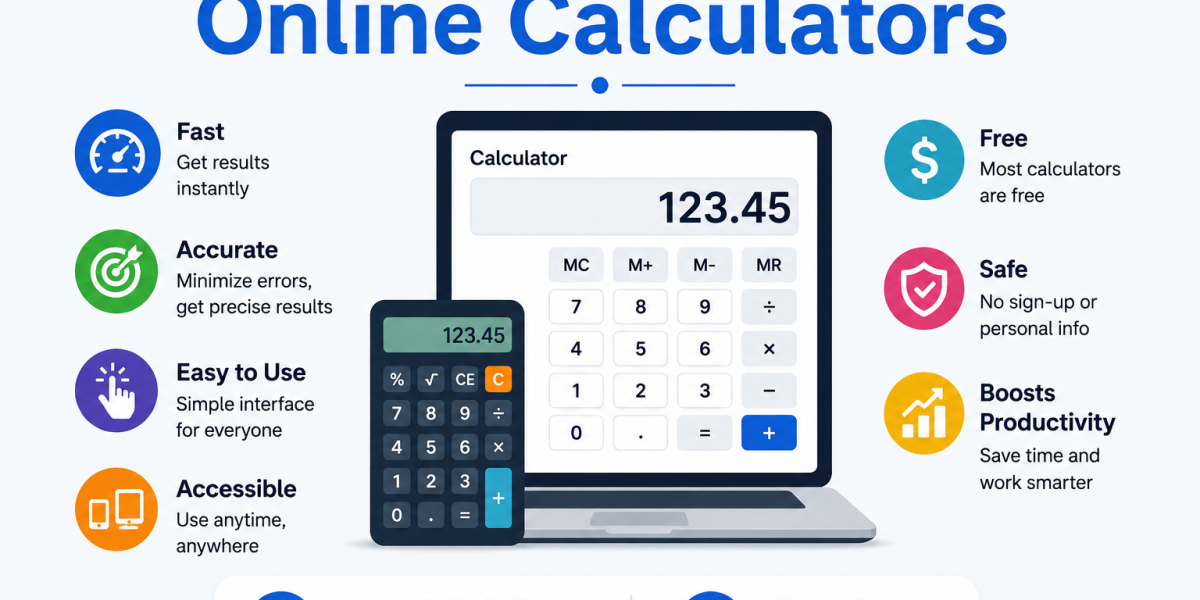
Benefits of Online Percentage Calculators
Online percentage calculators provide several advantages:
Accuracy
Reduces manual calculation errors.
Speed
Results are generated instantly.
Convenience
Accessible from computers, tablets, and smartphones.
Multiple Functions
Modern calculators include:
- Percentage increase calculators
- Percentage decrease calculators
- Discount calculators
- Tax calculators
- Markup calculators
- Grade calculators
- Profit and loss calculators
Educational Value
Students can verify calculations and improve understanding of percentage concepts.
Real-Life Percentage Examples
Shopping
A 30% discount on a ₹4,000 product:
Savings = ₹1,200
Final Price = ₹2,800
Banking
Fixed deposit earning 7% annual interest:
Investment = ₹1,00,000
Interest = ₹7,000
Sports
A batsman scoring 75 runs out of a team total of 300 contributes: 25%
Healthcare
If a medicine reduces disease incidence from 10% to 5%, the reduction is: 50%
Tips for Accurate Percentage Calculations
- Identify the base value correctly.
- Use the proper formula.
- Double-check calculations.
- Convert percentages to decimals when required.
- Utilize online calculators for complex computations.
- Verify percentage increases and decreases carefully.
Conclusion
Percentage calculations play a vital role in education, business, finance, science, and everyday decision-making. From determining examination results and tax liabilities to evaluating discounts and investment returns, percentages provide a universal language for comparing quantities and measuring change. Understanding key formulas such as percentage, percentage increase, percentage decrease, discount percentage, and percentage difference helps individuals make informed decisions.
Modern online percentage calculators make these computations effortless by delivering instant, accurate results. Whether you are a student, researcher, teacher, business owner, investor, or shopper, mastering percentage calculations can significantly improve your numerical literacy and analytical skills.
B K Hooda
Professor of Statistics & Head, Dept. of Mathematics & Statistics, CCS HAU Hisar.